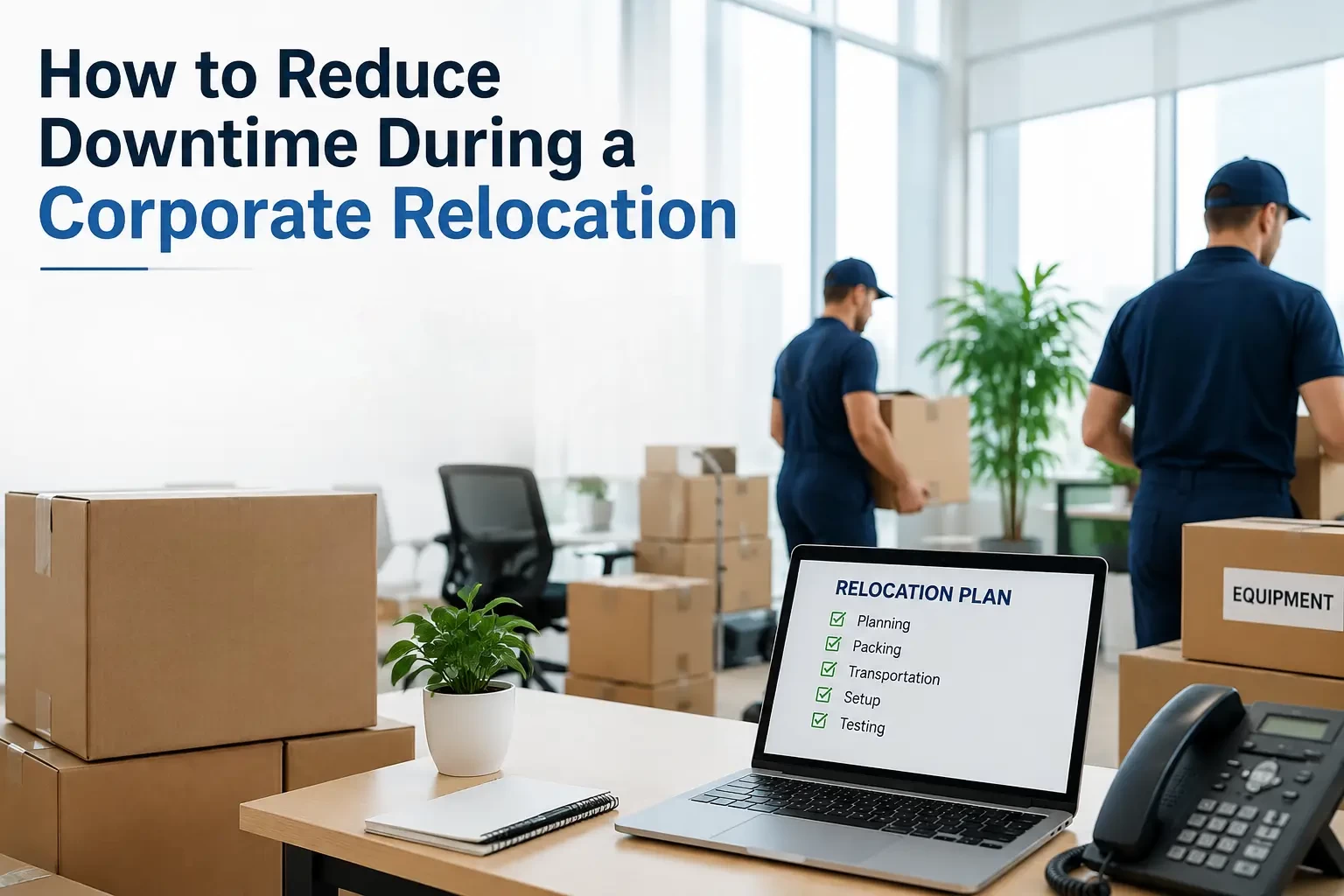
Office relocations happen for many reasons, including business expansion, the need for a more efficient workspace, cost optimization, or improving overall operations. While relocating to a new office offers exciting opportunities for growth, it can also disrupt day-to-day business activities if the move is not carefully planned. Delays in setting up workstations, IT systems, equipment, and communication networks can lead to lost productivity, missed deadlines, and unnecessary operational costs. Every hour your business is unable to operate efficiently can impact employee performance, customer service, and revenue. With a well-structured relocation strategy and the support of an experienced corporate relocation partner, you can minimize downtime, maintain business continuity, and ensure a smooth transition to your new workspace.
In this blog, we explore practical strategies to reduce downtime during a corporate relocation, from effective planning and IT preparation to employee coordination and post-move setup. Learn how the right relocation partner can help your business maintain productivity with minimal disruption.
Start Planning Well in Advance
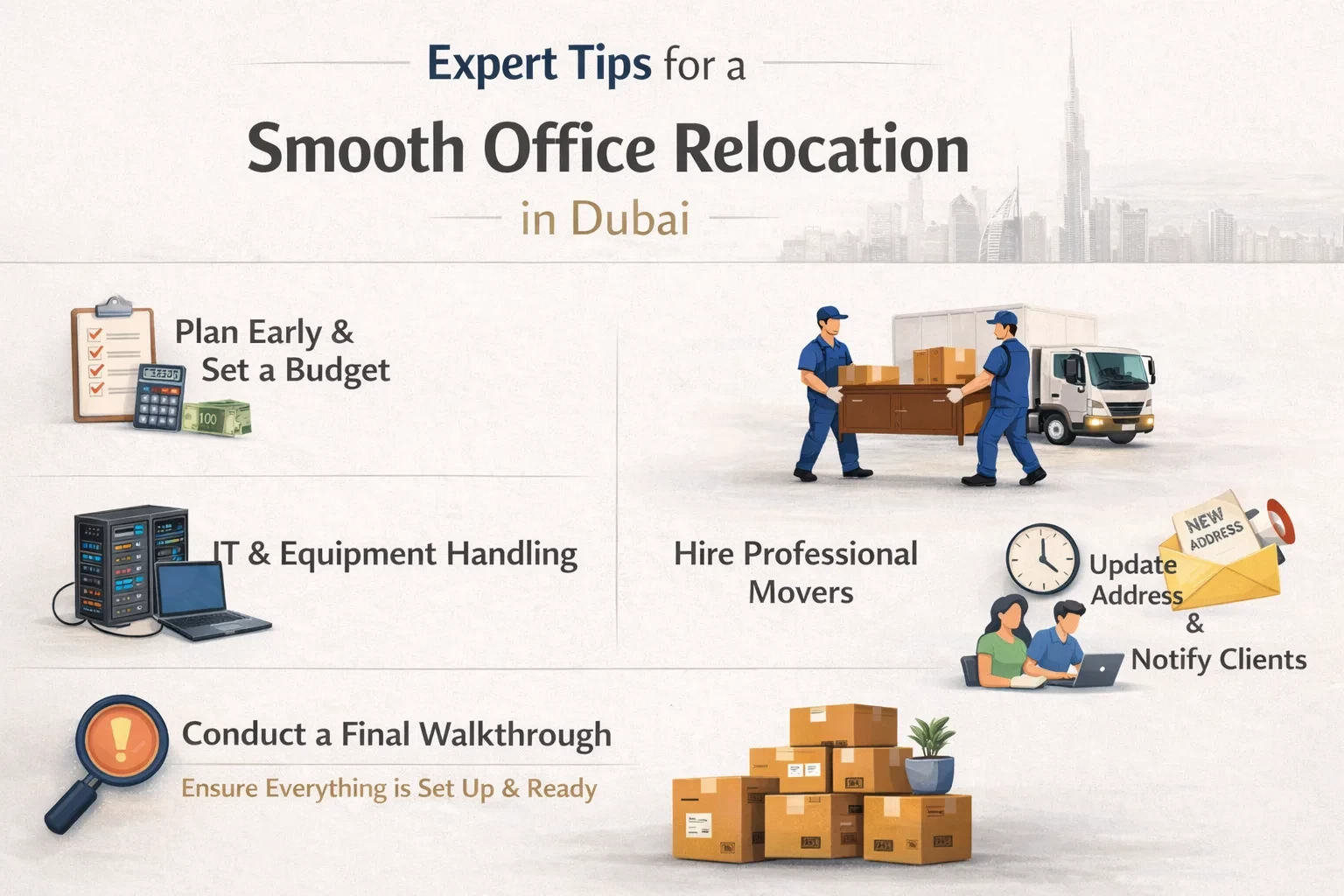
Last-minute planning is behind most of the delays and chaos that give office relocations a bad reputation. A corporate move should ideally begin several months before the actual date. This offers enough time to assess the new space, build realistic timelines, assign responsibilities, and get vendors coordinated properly.
Start by identifying which business functions genuinely cannot afford extended downtime. Knowing this early helps prioritize where resources and attention need to go. A detailed relocation checklist covering everything from packing schedules and utility transfers to employee communication keeps nothing slipping through the cracks.
Develop a Detailed Moving Schedule
Rather than treating the move as one big event, break it into phases with specific deadlines and clear ownership. A well-structured schedule keeps everyone aligned and reduces the confusion that tends to spike on moving day.
The schedule should cover office inventory verification, packing timelines by department, IT disconnection and reconnection, transportation, furniture dismantling and setup, system testing, and employee move-in dates. When people know what is expected of them and when, everything tends to run much more smoothly.
Consider a Phased Relocation
Moving an entire office in one go usually means shutting everything down at once. For medium and larger organizations, moving in stages is often the smarter approach.
Departments can relocate one at a time while others continue working from the existing office. Customer support, finance, and operations can stay where they are till they get their new workspace. This can help ease congestion during packing and setup and offers staff time to get comfortable without being dropped into a half-ready workplace.
Keep Employees Informed Throughout the Process
Employees who know what’s going on and what they’re supposed to do are much less likely to create delays or confusion on moving day. Communicate early and continue to communicate as events unfold.
Share the relocation timeline, packing instructions, new seating arrangements, department-specific responsibilities, and any temporary working arrangements. Many organizations appoint departmental move coordinators, which is a practical way to keep communication flowing and concerns resolved quickly without everything escalating to senior management.
Protect Critical IT Infrastructure
Technology issues during a move can bring a business to a standstill faster than almost anything else. Getting the IT side right is worth dedicating serious attention to.
Before the move, back up all critical data, document workstation configurations, label every cable and networking device, and arrange internet and phone installation at the new office before anyone arrives. Test everything before employees show up expecting to work.
Where possible, move servers and essential infrastructure during evenings or weekends. Professional relocation companies typically coordinate directly with internal IT teams to make sure equipment is transported safely and back online efficiently.
Organise Assets with Proper Labelling and Inventory
A well-labelled, properly inventoried move saves enormous amounts of time at the other end. When boxes are clearly marked by department, employee, or workstation, ideally with colour-coded labels, unloading and placement become much faster and less chaotic.
Keep track of computers and monitors, office furniture, documents, printers and networking equipment, meeting room kit, and general office supplies. When employees can find what they need immediately after arriving, the business gets back up to speed far more quickly.
Schedule the Move During Off-Peak Hours
If time permits, organize the physical transfer outside typical business hours: evenings, weekends, or public holidays. This has a minimal impact on both customers and staff.
Many businesses often try to arrange their move during a slower time when client demand is lower, giving them more breathing room. The idea is that when employees show up to the new office, it’s all set up and running.
Prepare the New Office Before Arrival
The move doesn't finish when the last box comes off the truck. Preparing the new workspace before people arrive is just as important as getting them there.
Before the first employee walks in, furniture should be assembled, workstations arranged, internet and phones operational, meeting rooms ready, security and access systems functioning, and utilities connected and tested. A final walkthrough to confirm everything is in order is time well spent.
Have a Contingency Plan
Even the best-run relocations can hit unexpected problems, including weather delays, traffic restrictions, a utility that isn't connected on time, or equipment that gets damaged in transit. Having a backup plan means these situations don't have to become crises.
Identify options in advance: temporary workspaces, remote working arrangements, or alternative transport if something falls through. Knowing the options ahead of time allows the business to respond quickly rather than scramble.
Work with an Experienced Corporate Relocation Company
A corporate relocation involves considerably more than moving furniture. Professional relocation businesses deliver structured planning, skilled teams, the correct equipment and proven processes, all of which greatly reduce both the risk and the disturbance.
From pre-move planning and packing through to transportation, storage, unpacking, workstation setup, and final office configuration, experienced specialists manage the process end to end. That frees internal teams to stay focused on the business rather than getting drawn into the logistics of the move itself.
Why Choose Bridgeway Relocations for Corporate Office Relocation?
With over 50 years of experience and a global network across more than 170 countries, Bridgeway Relocations manages corporate office relocations for businesses across Dubai, the UAE and foreign destinations.
Our services include everything from relocation planning and skilled packing to secure transportation, storage, customs paperwork, unpacking, furniture installation, and a full office setup. Businesses may move effectively without losing operational momentum, thanks to real-time cargo tracking, straightforward pricing, and knowledgeable specialists.
Whether you're relocating a small office or managing a large corporate move, Bridgeway Relocations ensures a seamless transition with minimal downtime. Contact us today to plan a smooth, efficient office relocation tailored to your business needs.